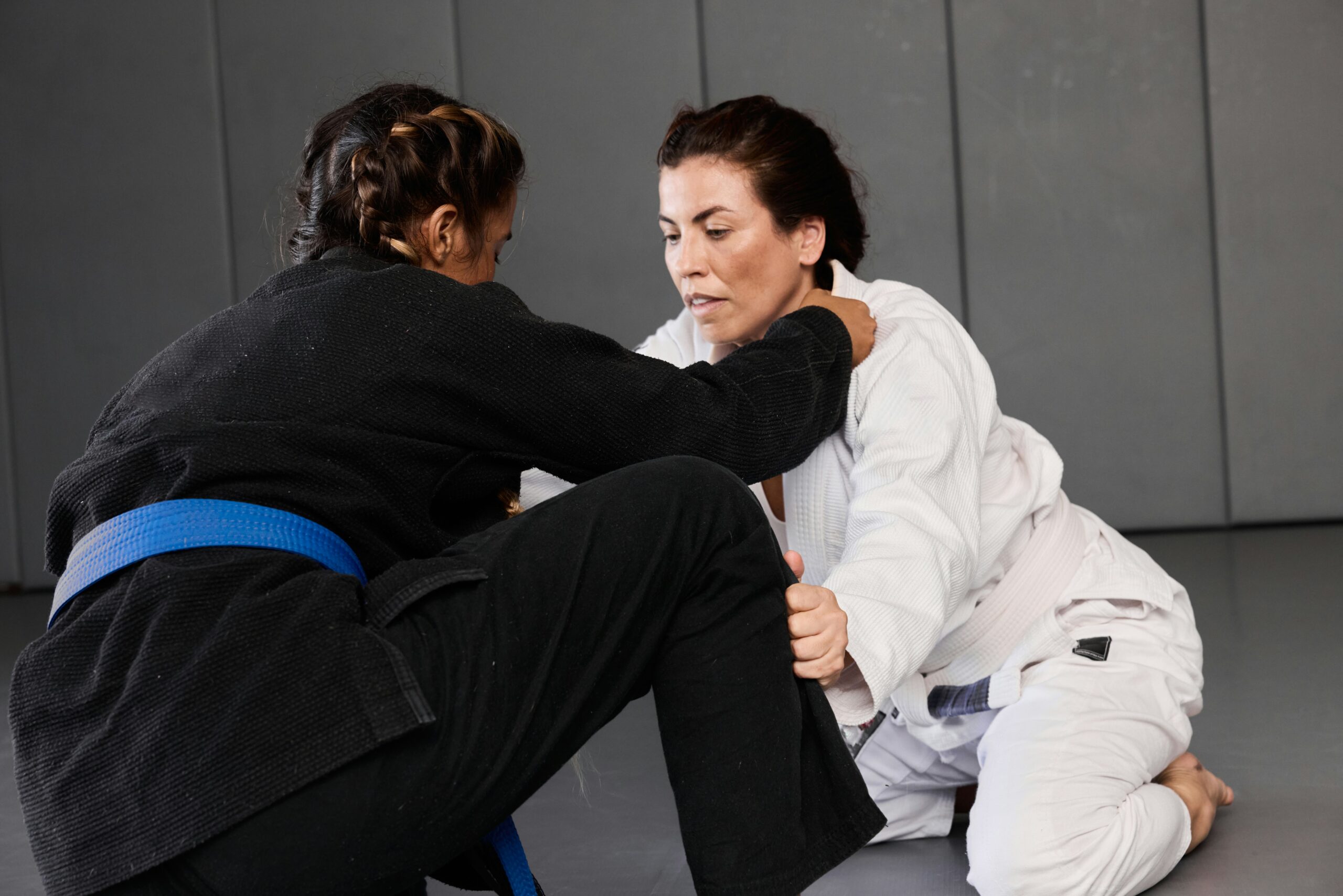
Jiu-Jitsu has become one of the most trusted self-defense systems for women who want practical skills that work in real situations. It focuses on leverage, technique, and strategy rather than strength, making it ideal for anyone, regardless of size or athletic background. Women gain confidence, awareness, and the ability to handle physical confrontations with clarity and control. Jiu-Jitsu is not about aggression; it is about protection, problem-solving, and using technique to neutralize threats. These skills transfer into everyday life, helping women feel more secure in any situation.
Another powerful advantage is how Jiu-Jitsu builds mental resilience. The training environment teaches women to stay calm under pressure, make smart decisions, and respond effectively to unpredictable situations. These habits become second nature over time. Instead of freezing when faced with danger, women with Jiu-Jitsu experience can think clearly and take action. The journey also builds community and support, giving women a place to grow stronger together.
Understanding Realistic Self-Defense
Real self-defense is about responding to situations that do not follow rules, and Jiu-Jitsu prepares women for exactly that. The techniques are designed for close contact and physical control, which mirrors the reality of most real-world encounters. Instead of relying solely on strikes, Jiu-Jitsu teaches escapes, leverage, and positions that allow a smaller person to defend against someone larger. Women learn how to react to grabs, holds, and attempts to overpower them. These scenarios are practiced repeatedly so that the body learns how to respond even under stress.
Another important aspect is situational awareness. Jiu-Jitsu encourages women to understand others’ distance, body language, and energy. This helps prevent dangerous encounters before they escalate. Training also improves balance, timing, and movement, which are all essential components of personal safety. Instructors often explain how and why attacks happen, giving women tools to stay alert in both public and private settings. This combination of knowledge and physical skill creates a strong foundation for daily protection.
Key Techniques That Make a Difference
The most effective techniques in Jiu-Jitsu for women are those that work regardless of the attacker’s size. For example, the hip escape teaches women how to create space when pinned, which is one of the most common positions in an assault scenario. The guard position is another tool that empowers women to control an attacker from the ground and keep themselves safe long enough to escape or call for help. These techniques rely on leverage, not strength, which makes them incredibly reliable.
Grip breaks, choke defenses, and positional reversals also play a major role. Women learn how to remove an attacker’s hold, protect their airway, and turn a disadvantage into a neutral or dominant position. Each technique is drilled with a partner so that women understand how it feels in motion, not just in theory. This realistic training is what makes Jiu-Jitsu one of the most respected self-defense systems worldwide.
Building Confidence Through Training
Confidence grows naturally as women practice Jiu-Jitsu. The training mats become a safe environment where they can test their limits, push through challenges, and discover strengths they did not know they had. Each class provides opportunities to succeed, whether by learning a new technique or escaping a difficult position. Over time, the fear of being overpowered fades, giving way to a sense of control and readiness.
This confidence carries over into everyday life. Women who train often stand taller, speak more assertively, and set stronger boundaries. They become less likely to be seen as targets by potential attackers. Even simple tasks like walking alone or traveling at night feel less intimidating. Jiu-Jitsu helps women trust their instincts and abilities, giving them a new sense of security.
Physical and Mental Health Benefits
Jiu-Jitsu offers a complete workout that strengthens the entire body. Women build core stability, endurance, and functional strength that support real-life movements. Unlike traditional gym routines, Jiu-Jitsu keeps the mind engaged and the body active through dynamic, full-body motions. The emphasis on technique also helps prevent injury and encourages long-term participation.
The mental benefits are equally important. Training reduces stress, improves focus, and teaches emotional control. Women learn to manage adrenaline, breathe through discomfort, and stay calm when situations become intense. These skills are incredibly valuable outside the gym. Whether dealing with workplace stress or personal challenges, women find that their Jiu-Jitsu training helps them approach problems with clarity and confidence.
The Supportive Community Behind the Training
One of the most unique aspects of Jiu-Jitsu is the sense of community it creates. Women train with partners who help them learn, encourage growth, and celebrate progress. This supportive environment helps women feel safe as they try new techniques or step out of their comfort zone. Many lifelong friendships begin on the mats, where trust and teamwork form naturally.
Women-only classes have also become more popular. These classes provide a comfortable environment for beginners and allow women to focus on self-defense scenarios tailored to them. Instructors understand the concerns women may have and tailor the training to address real situations. This creates a space where women feel empowered and motivated to continue learning.
Bringing Jiu-Jitsu Into Daily Life
The lessons from Jiu-Jitsu extend far beyond the gym. Women learn how to set boundaries, recognize unhealthy behavior, and speak up for themselves. They also learn how to stay aware of their surroundings and avoid dangerous situations. These practical skills help them navigate daily life with confidence and purpose. Self-defense becomes a mindset, not just a physical ability.
Even small habits, such as maintaining balanced posture or practicing calm breathing, can make a big difference in stressful moments. Women who train often notice improvements in problem-solving and decision-making. Jiu-Jitsu teaches them to assess situations quickly and respond effectively, whether on the mats or out in the world.