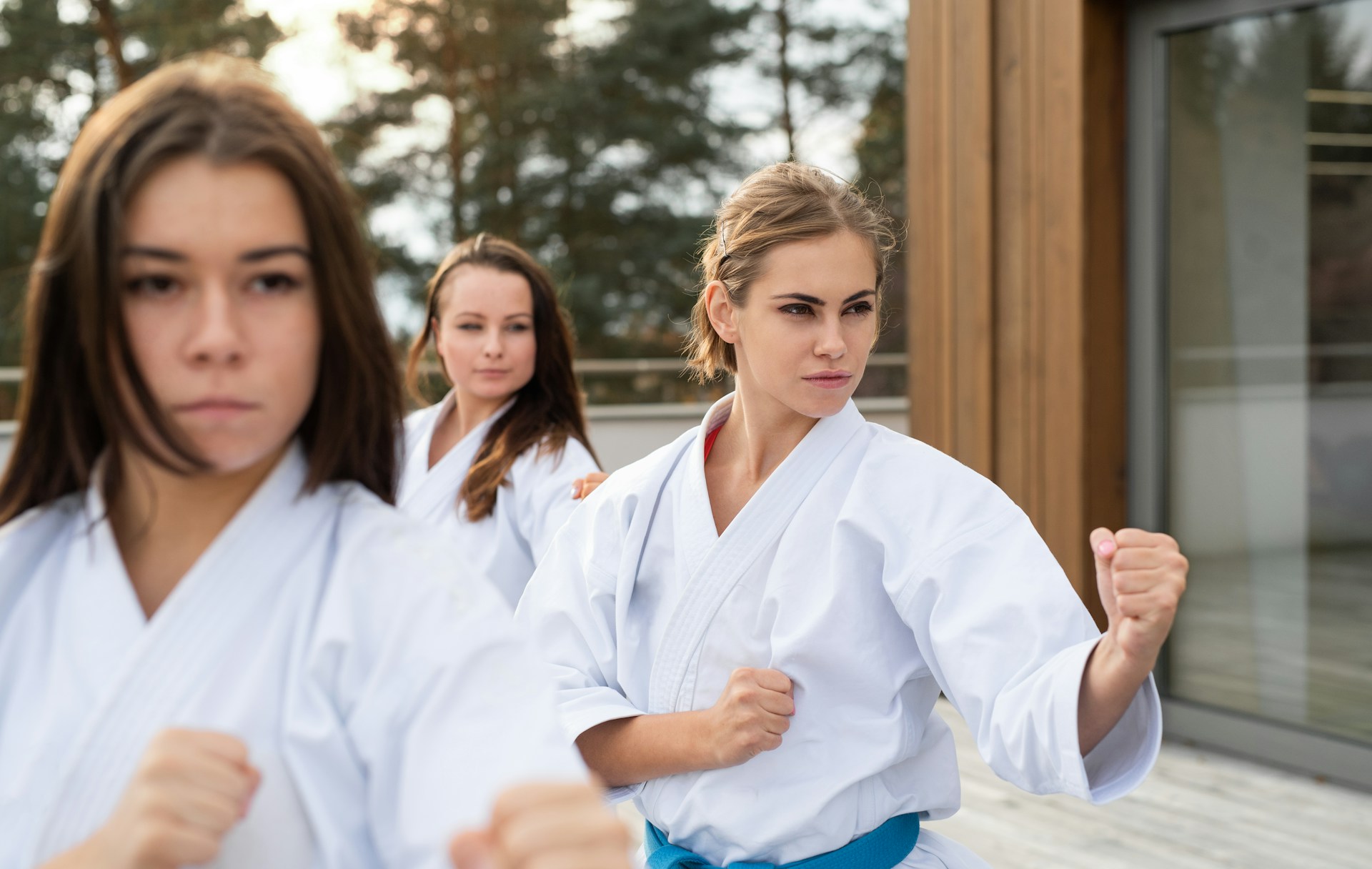
Women often look for practical ways to feel safer, stronger, and more prepared in uncertain situations. Martial arts can help, but Brazilian Jiu-Jitsu stands out because it focuses on leverage, control, timing, and escape rather than size alone. Through women’s self-defense training, students learn how to stay calm under pressure and respond with purpose instead of panic.
Jiu-Jitsu does not promise that every dangerous situation will end easily. However, it can give women useful tools for managing physical threats, creating space, and escaping when possible. At the same time, regular practice builds confidence, fitness, and awareness that can support safer decision-making beyond the gym.
Learning to Stay Calm Under Pressure
One of the biggest benefits of Jiu-Jitsu is learning how to think while under physical pressure. During training, students regularly work from difficult positions where they must stay calm and choose the right movement.
At first, this can feel uncomfortable. However, repeated practice teaches the body not to panic as quickly. Instead, students learn to breathe, protect themselves, and look for an escape.
This ability can matter during a real threat because panic often makes movement harder. Therefore, staying calm can help a person make clearer choices when every second matters.
Jiu-Jitsu also teaches students to recognize when they are in a weak position. As a result, they become more aware of balance, distance, and body control.
Using Technique Instead of Strength
A major idea in Jiu-Jitsu is that good technique can reduce the advantage of size and strength. Smaller students learn to use angles, leverage, and positioning to defend themselves against larger training partners.
For women, this makes the martial art especially practical. Many common self-defense concerns involve dealing with someone who may be physically stronger. Jiu-Jitsu helps students understand how to use their whole body rather than relying only on upper-body strength.
For example, proper hip movement can create space when someone is holding a person down. Likewise, good framing can protect the body and prevent an attacker from moving closer.
Although strength still matters, technique can make movement more efficient. Therefore, regular practice helps women build a system of responses instead of depending on force alone.
Escaping From Difficult Positions
Jiu-Jitsu spends a large amount of time teaching escapes from the ground. This can be useful because many physical struggles may involve grabbing, pushing, falling, or being held down.
Students learn how to protect their head, control distance, and move their hips to improve position. In addition, they practice escaping from common holds under controlled conditions.
The goal is not always to dominate another person. In a self-defense setting, the goal may simply be to create enough space to stand up and leave safely.
This focus makes training practical. Students learn that escaping danger can be more important than trying to win a fight.
Building Awareness Through Regular Practice
Self-defense begins before physical contact happens. Therefore, awareness plays an important role in personal safety.
Jiu-Jitsu can improve awareness because students become more comfortable reading body movement and recognizing changes in distance. They also learn how quickly a situation can shift when balance or control changes.
Training can also improve confidence in setting boundaries. Someone who practices regularly may feel more comfortable speaking clearly, moving away, or reacting sooner when something feels wrong.
In the middle of this process, practical grappling skills help students understand how close-range situations actually feel. This experience can reduce hesitation because movements have already been practiced many times.
Developing Strength Without Losing Mobility
Jiu-Jitsu provides a full-body workout. Students use their legs, core, arms, back, and grip during nearly every training session.
However, the goal is not simply to become stronger. Mobility, balance, flexibility, and endurance are also important parts of effective movement.
A stronger body can make self-defense techniques easier to perform. At the same time, better fitness can help a person move quickly, maintain control, and avoid becoming tired too soon.
Because Jiu-Jitsu uses many natural movements, students often build strength while also improving coordination. Therefore, training can support both physical fitness and practical defense skills.
Practicing Against Real Resistance
One reason Jiu-Jitsu feels realistic is that students practice with training partners who resist. This is different from learning techniques only through demonstrations.
During sparring, students must apply skills while another person is trying to escape, control, or improve position. As a result, they learn which techniques work for them under pressure.
Controlled resistance also helps students understand the difference between knowing a move and actually using it. A technique may look simple, but timing and positioning become much more important when someone moves unpredictably.
Because training happens in a structured environment, students can make mistakes, learn, and improve. Over time, this process helps build realistic confidence.
Creating Confidence Beyond the Gym
Confidence from Jiu-Jitsu often extends into daily life. Students may begin training because they want self-defense skills, but many also develop greater trust in their ability to handle challenges.
Progress in Jiu-Jitsu usually happens slowly. Therefore, students learn patience, discipline, and consistency. These habits can improve confidence because progress comes from real practice rather than empty motivation.
Training also creates a supportive environment where women can learn from others with different experience levels. Sharing difficult drills and improving together can build a strong sense of community.
Most importantly, confidence does not mean believing that danger cannot happen. Instead, it means knowing that you have practiced useful responses and can make better choices under stress.
Turning Training Into Everyday Readiness
Effective self-defense should focus on avoiding danger when possible and responding clearly when avoidance fails. That is why real-world defense awareness matters alongside physical technique. Jiu-Jitsu can teach women how to protect themselves during close contact, but it also encourages calm thinking, smart movement, and better awareness of risk.
No martial art can remove every threat, and physical confrontation should never be the first choice when a safer exit exists. However, consistent training can give women practical tools that are tested under pressure. By learning leverage, escapes, control, and composure, women can build stronger confidence and greater readiness for situations they hope never to face.